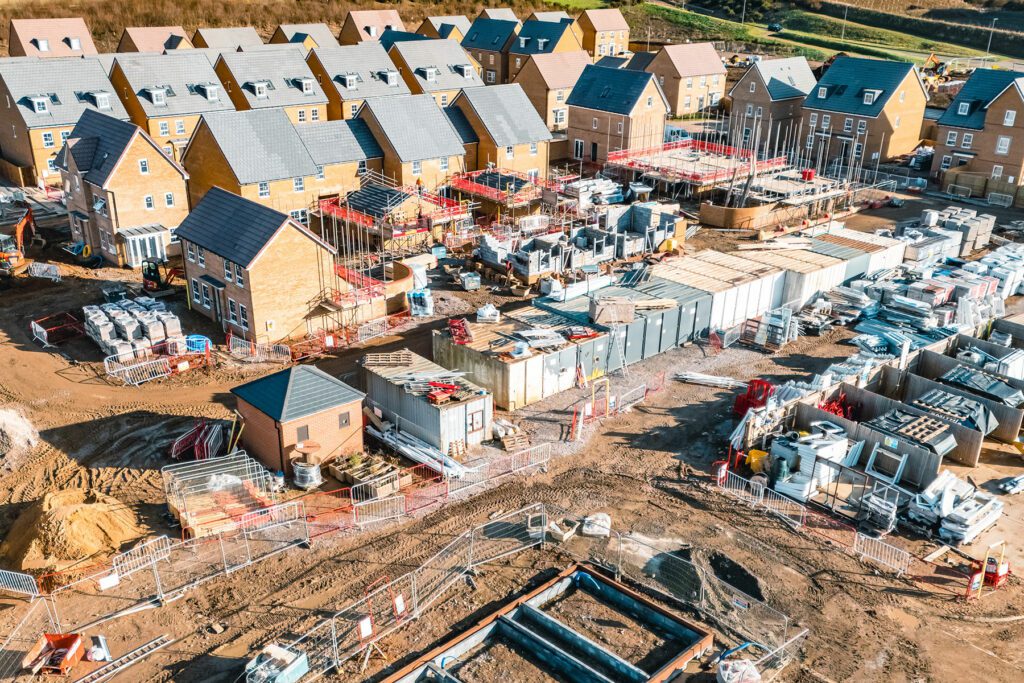
From 11 May 2026, local planning authorities (LPAs) will no longer be able to refuse planning permission for large housing schemes (150 or more homes) without first consulting the Secretary of State. The Direction does not change planning policy or who ultimately decides applications, but it does add an important procedural step before refusal.
For housebuilders with applications for medium to large sites this is likely to be a helpful change, but there are some downsides.
What is a call-in?
That planning decisions are political decisions is evidenced by the Secretary of State’s power (under section 77 of the TCPA 1990) to identify any planning application in the system and ‘direct’ that the LPA pass the determination of that application to him. If the application is called in, Steve Reed, the current Secretary of State, will be the person who will grant or refuse planning permission.
What is a call-in Direction?
The new Direction adds to the list of existing call-in Directions. Together, these call-in Directions describe the types of planning applications (and now scenarios) that might be subject to a call-in. Directions already covered applications for development that may conflict with national policies on important matters, or may have significant long-term impact on economic growth, or which could have significant effects beyond their immediate locality.
Prior to this new Direction, the guidance on call-in directions was that the Secretary of State only considered the use of his call-in powers if planning issues of ‘more than local importance’ are involved.
What is covered by the new Direction?
The Direction applies to planning applications that include 150 or more dwellings (houses, flats or a mix) and which have not been determined before 11 May 2026.
What happens when a call-in Direction applies?
If an LPA is minded to refuse your qualifying application, the LPA must first consult the Secretary of State, providing the details of the application and the proposed reason for refusal. This consultation is mandatory and pauses the decision-making process as the LPA cannot issue a refusal during the next 21 days whilst the Secretary of State considers whether he will exercise his powers.
If your application is not called in, presumably the LPA will refuse and you have the right to appeal. The new appeal procedures favour determination by written representations on the application as submitted. This will streamline the appeal process, but with little or no opportunity to improve your application’s prospects.
If your application is called in, an Inspector is appointed to hear the application, and report to the Secretary of State. The Inspector may cause a public inquiry to be held. When reaching his decision the Secretary of State may follow the Inspector’s Report or may not.
What are the potential consequences of a call-in?
In the face of the above options the consequences of a call-in under this new Direction may appear subtle.
A call-in will introduce a minimum 21-day delay in the determination process. If the Direction avoids refusal altogether, the time savings can be significant, but if the call-in is confirmed the determination timeline will be significantly extended whilst the Inspector hears the application and then the Inspector’s report gets to the top of the Secretary of State’s to-do list and he makes the decision.
Although there are no additional application costs for a developer arising from a call-in, there will be the additional costs of resourcing a public inquiry if that is how the Inspector hears the application evidence. Of course, these additional costs would have already been on the horizon if your application was to be refused and you intended to appeal.
In making the Direction, the government may be hoping that LPAs will respond to the additional scrutiny by refusing fewer qualifying applications. We certainly hope so.
There can be a propensity for LPAs to duck making tricky and locally political decisions by allowing (or causing) an inspector or the Secretary of State to make the decision. Also, whereas the appeal of an outright refusal exposes the LPA to a potential adverse costs award, costs awards for unreasonable behaviour on the LPA’s part under a call-in may be harder to justify. Might these factors combine to make LPA’s more likely to be ‘minded to refuse’ your application so as to engineer a call-in? We hope not.
What should housebuilders do?
It remains the case that submitting an application with the best prospects for approval (or fewest reasons for refusal) is the best risk management.
If a call-in Direction is made you will need to swing promptly into action engaging with the Inspectorate on the determination timeline and method and with the appointment of your appeal team.
Is the Direction positive or negative for housebuilders?
Overall, the Direction is positive.
It raises the bar for refusal of large residential schemes, ought to encourage negotiation, and may reduce the number of unnecessary appeals. While it can introduce short-term delay, it modestly but clearly shifts the balance in favour of major housing development.