Search Results for: "site"

Dealing with data protection claims

An increasing number of high-profile data breaches and regulatory incidents have been capturing headlines in the UK. As a result, a claims culture in relation to data breach claims in particular, is springing up against organisations of all sizes and across a variety of sectors.

We have summarised some of the types of claims your organisation may receive and have set out our top tips for dealing with one, should you receive one in your in-tray.

What is the nature of the claim?

The most common form of claim we are seeing, particularly within the domain of group action claims, are data breach claims. As an example, these may result from:

  • personal data made public or disclosed to a third party from emails or documents sent to the incorrect recipient, or information disclosed in error, by cyber-attack or a rogue employee;
  • failure to take steps to prevent malign actors within an organisation or third parties with whom an organisation works, from illicitly acquiring data; or
  • misuse of personal data or using data in a way not stated as a purpose in an organisation’s policies. This includes claims against companies for using cookies and other tracking software against a user’s consent.

Identify the claimant(s)

Once you have identified the nature of the claim, you should ascertain whether a claim is being brought against you by either an individual or by a class of individuals. Common claimants with data protection claims are:

  • Customers;
  • Employees and contractors;
  • Website users (who may or may not become customers).

As actions by groups or classes of individuals can be significantly more complex than actions by individuals, the rest of this point (2) is devoted to these claims.

Claims from classes of individuals generally fall into two categories: so called “opt-in” and “opt-out” actions.

Opt-in

An “opt-in” claim is brought by a group of individuals who have actively agreed to take part in a claim. In the more high-profile examples, the claims are usually managed by law firms acting for the claimants or by claims management companies and such claims tend to be actively marketed (including on social media and television adverts) to encourage affected individuals to take part. A good example of this is the data breach claim against EasyJet, where allegedly millions of customers’ data was accessed by unauthorised actors in May 2020. In this case, affected customers needed to elect to participate in the group action by proving their personal data was affected.

Many of these claims will be brought by claims management companies on the basis of a conditional fee arrangement i.e., a “no-win, no fee ” for the client.  For these types of organisations costs recovery is key. Invariably this means that any settlement will involve significant costs in addition to the compensation sought. We have seen claims for compensation in the region of £750 – £1,000 per claimant for minor breaches. This figure could increase substantially if the claimant claims they have suffered particular distress or damage in terms of their mental health as a result of a data breach.

Opt-out

The second type of claim is an “opt-out” claim, whereby an action is brought on behalf of a class of affected individuals who may not be aware of the claim. Unless an individual has taken active steps to withdraw, they will be included in the action. In the United Kingdom, unlike other jurisdictions such as the USA, these types of actions are not common.

Indeed the recent, seminal case of Lloyd v Google [2021] reduced the likelihood of such claims being used. The Supreme Court considered whether to allow an opt-out group action against Google on behalf of affected iPhone users for alleged data privacy breaches relating to the Safari software. The Court found that it was not possible to bring a class action for damages relating to the loss of control of data under the GDPR’s predecessor legislation (to which this claim pertained) as the individual claimants needed to show damage stemming from the infringement and this would need to be considered for each claimant. On that basis, the Court held that the “opt out” group action was not the appropriate vehicle in this situation.

However, later cases such as Stadler v Currys Group [2021], relating to a claim for compensation for a data breach under s168 of the Data Protection Act supplementing Article 82 of the UK GDPR, have suggested that damages are likely to be available under the UK GDPR for “non-trivial claims” where there is proof of damage or distress on the part of the claimant.

Though specific to its facts, Lloyd v Google was a reassuring outcome for businesses that may otherwise have been subjected to a wave of opt-out claims inspired by Lloyd. However, it should be noted that the Supreme Court did not rule out other “opt-out” claims being brought and elected to demonstrate how future claims could be actioned. Therefore, the risk of “opt-out” claims does remain a possibility and the future of these actions will largely depend on whether claims management firms consider such claims to be financially viable.

Top tips for dealing with a data protection related claim

  • Be organised, ensure you have internal processes that allow claims to be spotted, escalated and dealt with. Even though some of the above claims may be opportunistic in motivation, failure to properly respond to communications from or address the concerns of claimants may later prejudice a defence if a claim is filed in the courts.
  • Some communications received from claimants will identify themselves as “letters before action”. It is important that you diarise any deadlines for reply specified in the letter. More formal pre-action approaches (likely from professional claimant organisations, as discussed in point 2 above) will follow the Pre-action Protocol for Media and Communications. As such you will need to ensure you are aware of and able to respond within the set deadlines. Failure to do so, may negatively impact your position if your case does go to trial and runs the risk of an adverse costs order.
  • Where no date for a reply is included in a letter of claim, you should aim to acknowledge receipt as soon as possible. It may also be appropriate for you to send a holding response to state that you are reviewing the claim and will respond more fully by a certain date.
  • Carry out an internal fact-find and a search for any relevant documents, to establish the factual background to the claim and compile relevant information to create a timeline of events around the time of the alleged breach and to assist with your defence of that claim.
  • It is important that from an early stage, your organisation provides robust, prompt responses to protect your position against any threatened claim being issued at court (but only once you are in possession of all the facts regarding the incident leading to the threatened claim).
  • Carefully consider how you respond substantively to any allegations. We understand that in many cases, organisations will want to defend claims on a point of principle. However, this should always be weighed against the potential reputational and financial costs if the claim does proceed to court and increased public attention from such an action. Fighting a claim on a point of principle may not be advisable, particularly if you establish that the data breach complained of did indeed take place and in light of its severity (based on the risk to the rights and freedoms of the individual whose personal data was breached).
  • Factor in the likely costs of a claim into your decision making. The longer the dialogue between your organisation and the claimant continues, the more costs will accrue which the claimant will likely seek recovery of as part of any pre-action settlement. Seek advice from specialist solicitors at an early stage for strategic input in this respect.
  • Put your insurers on notice that you have received a claim and/or consider taking out further insurance to mitigate against any potential losses. You will need to check your insurance policy carefully to see if these circumstances apply. The financial risks posed by claims (particularly group action claims) can be punitive and failure to follow the required notification procedure could prejudice your ability to rely on the insurance.

We are experienced in assisting organisations to deal with such claims and reach a positive outcome. We are able to advise you on how to best balance the various risks involved and can also assist with interpretation and negotiation with insurers if required. If you require further advice or assistance in relation to a claim resulting from a data breach claim, then please do get in touch with Tom Torkar or Emily Aggett.

Nutrient Neutrality: latest guidance from Natural England

On 16 March 2022, Natural England issued new nutrient neutrality guidance to Local Planning Authorities (LPAs). Natural England has advised that in areas where protected sites are in ‘unfavourable condition’ due to nutrient pollution, LPAs can only approve a proposal for development if they are certain that it will have no negative effect on the protected site. The advice was issued to the 32 LPAs, that had previously received advice, as well as to 42 new LPAs, bringing the total LPAs affected to 74.

The guidance includes a new generic nutrient neutrality methodology, catchment specific calculators and an updated catchment map. The new catchment map includes 27 new catchment areas.

Previous guidance

When the previous advice was first issued back in 2019, Natural England focused on areas in the south and west of England. The new guidance now also catches several areas in the Midlands and the North. Developers in these catchments will need to demonstrate nutrient neutrality before planning permission can be granted. Not only will a developer have to satisfy the LPA that mitigation is sufficient and nutrient neutrality is secured (either on-site or off), but Natural England will also need to sign-off. As part of the appropriate assessment stage of the Habitats Regulations Assessment (HRA), there is a statutory 21-day consultation with Natural England.

We explain the original guidance and the methodology stages in more detail in our article ‘Nutrient Neutrality – the basics‘.

New variables

The four-stage process for determining a nutrient budget remains largely the same. However, the new generic methodology introduces the following new variables at stages two and three of the methodology in relation to leaching rates:

  1. operational catchment;
  2. soil drainage type;
  3. average annual rainfall; and
  4. whether the site is within a Nitrate Vulnerable Zone (NVZ).

These new variables impact hugely on the leachate kg/ha of nitrate and phosphate for each of the individual land use types. Therefore, the land use nutrient export coefficient for both existing and future land use differs from the previous methodology calculations.

The Government’s Planning Advisory Service has confirmed that these updated tools will change some of the figures used in nutrient budgets and developers will need to rerun their calculations using the new relevant calculators.

Worked example

For example, under the previous guidance for the Stodmarsh SAC and Ramsar:

Land use

Area (ha)

Nitrogen leaching rate (kg/ha/yr)

Phosphorus leaching rate (kg/ha/yr)

Existing land Poultry farming 50 3015 17
Future land Woodland 50 250 1

Fig.1

Under the new guidance:

Catchment

Land use

Area (ha)

NVZ

Average annual rainfall (mm)

Soil drainage type

Nitrogen leaching rate (kg/ha/yr)

Phosphorus leaching rate (kg/ha/yr)

Existing land Lower Stour Poultry farming 50 Yes 1,110.1 – 1,200 Slightly impeded drainage 2380.50 23.71
Future land Lower Stour Woodland 50 Yes 1,110.1 – 1,200 Slightly impeded drainage 150 1

Fig 2.

With significantly less average annual rainfall and impeded drainage:

Catchment

Land use

Area (ha)

NVZ

Average annual rainfall (mm)

Soil drainage type

Nitrogen leaching rate (kg/ha/yr)

Phosphorus leaching rate (kg/ha/yr)

Existing land Lower Stour Poultry farming 50 Yes 800.1 – 850 Impeded drainage 1880.33 40.19
Future land Lower Stour Woodland 50 Yes 800.1 – 850 Impeded drainage 150 1

Fig. 3

This not only affects developers and LPAs but also those providing off-site mitigation. Using the example in figure 3, under the new guidance the mitigation site will have:

  • 1,730.33 kg/yr of nitrogen credits available; and
  • 39.19 kg/yr of phosphate credits available

In comparison to:

  • 2,765 kg/yr of nitrogen credits; and
  • 16 kg/yr of phosphate credits

under the old guidance.

Impacts

LPAs are taking stock to understand the implications of the new guidance. Since different LPAs are affected to varying degrees, there have been a variety of responses to the new guidance.

Havant Borough Council has issued a statement saying that they have “temporarily paused the approval of any residential developments in the face of updated terms and conditions for dealing with nutrient neutrality as defined by Natural England.”

Norwich City Council has stated until these matters are resolved, the city council will not be able to grant planning permission for developments comprising overnight accommodation in Norwich”.

Although the new methodology is more sophisticated than the previous iteration, the wider scale roll-out is likely to result in severe delays to development across England. We have already seen considerable delays in catchments already affected by the previous advice.

LPAs that had already made good progress towards developing strategic mitigation solutions based on the previous guidance, such as the Solent Nutrient Market Pilot, will now have to recalculate.

Natural England has pledged to give £100,000 to each affected catchment to support LPAs. This is in addition to a collective series of pledges from Severn Trent Water, United Utilities, South West Water and Yorkshire Water totalling £24.5m.

For further information and questions about nutrient neutrality, please contact Ben Sharples

Nutrient Neutrality: the basics

The purpose of this article is to explain the basics of nutrient neutrality. Further and more detailed information about the specific elements of this topic can be found on our website.

What is Nutrient Neutrality?

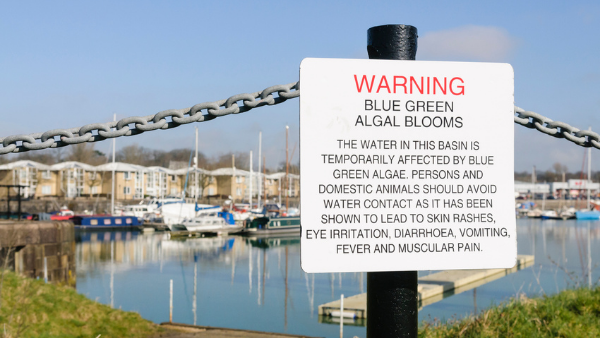
Nutrient neutrality is the outcome achieved when a particular land use or a specific development, within catchment areas of vulnerable watercourses, does not result in an increase in phosphate and nitrate levels in those watercourses beyond current levels. Excess phosphates and nitrates contribute to the growth of algal blooms, leading to eutrophication, which causes oxygen levels for fish and other aquatic life to be reduced significantly.

Dutch N case

The issue arose following the European Court of Justice ruling in the landmark ‘Dutch N’ case in November 2018. This decided that projects or plans must not have a significant adverse effect on site conservation objectives.

In the UK, Natural England picked up on the problem and issued guidance to several Local Planning Authorities (LPAs) between 2020 and 2021 about the risk of permitting changes in land use and development in nutrient vulnerable areas.

In two previous articles, “Planning & nitrate neutrality: Legal challenge to Natural England’s guidance” and “Planning and nitrate neutrality: the High Court backs Natural England’s guidance”, we reported on legal challenges to the validity of the guidance applicable to the Solent, in the case of R(Wyatt) v Fareham Borough Council. The High Court decision in that case, to dismiss an application for Judicial Review of the decision to grant planning permission, has since then been appealed. The hearing in the Court of Appeal was held on 5 and 6 April 2022 and we are currently awaiting judgment.

The Natural England guidance focuses particularly on development within Special Areas of Conservation (SACs), Special Protection Areas (SPAs) and Ramsar Sites (i.e., wetlands of international importance), with an aim to achieve nutrient neutrality.

The key areas targeted by Natural England (amongst others) include:

  • Cornwall – the Camel estuary;
  • Essex – the Orwell and the Stour;
  • Kent – the Great Stour;
  • Hampshire and Dorset – the Solent;
  • Herefordshire – the Wye and the Lugg;
  • Shropshire – the Clun;
  • Somerset – the Levels;
  • Suffolk – the Deben estuary; and
  • Wiltshire – the Avon.

Coastal and marine areas such as the Solent suffer from an excess of nitrates, whereas for inland freshwater environments such as the Somerset Levels it is phosphates that are of concern.

On 16 March 2022, Natural England issued a letter to a further 42 LPAs as well as the existing 32 LPAs, bringing the total number of affected LPAs to 74. Previously unaffected LPAs in areas such as Cumbria, Northumberland, Cheshire and parts of Yorkshire, for example, will now have to implement mitigation plans for new developments.

Natural England provided an updated national map showing the affected catchments. As a result, some existing areas have been assigned new catchments, that now need to be nutrient neutral. The new advice includes a ‘National Generic Nutrient Neutrality Methodology’ along with specific catchment calculators.

Types of development

Although evidence has demonstrated that residential development contributes to high levels of nutrients in the water, the nutrient neutrality obligation does not just affect residential development. All changes to land use or development that might cause additional nutrient loading are caught.

Habitats Regulations Assessments (HRA)

As a result of the Conservation of Habitats and Species Regulations 2017 (as amended), LPAs now require HRAs for proposed changes in land use or development in affected areas. This is to ascertain whether there will be any adverse effects due to the project’s location, size or nature. Mitigation solutions have been required where adverse effects have been found.

The ‘Appropriate Assessment’ (AA) stage of the HRA must be carried out before an LPA will grant planning permission. Natural England advises that the LPA must have practical certainty, that the nutrient neutrality measures, relied on in an AA, will be implemented and in place at the relevant time, when the AA is undertaken, e.g. secured and funded for the lifetime of the development’s effects. In addition, all HRAs must be undertaken in consultation with Natural England.

Previously consented, as well as existing schemes are caught. This includes LPAs discharging planning conditions, approving reserved matters or granting minor amendments to existing planning consents.

LPAs have embargoed granting planning consents or discharging conditions until clear HRA assessments or solutions have been put in place and are proven to work. The embargoes have created immense delays and additional expenses to residential development in affected LPA areas. The Housebuilders Federation (HBF) estimates that 50-60k new homes are currently held up. HBF also estimates that the cost of mitigating phosphate, for example, is around £5,000 per consented dwelling.

Calculating the nutrient burden

The generic methodology produced by Natural England involves a four stage process for determining a nutrient budget for a given development; this takes into account the operational catchment, soil drainage type, average annual rainfall and whether the site is within a Nitrate Vulnerable Zone (NVZ):

A .Calculate the proposed development’s total nitrogen/phosphate that would be discharged into the catchment;

B. Calculate existing (pre-development) nitrogen/phosphate from the current land use of the development site;

C. Calculate nitrogen/phosphate for the non-built land uses proposed for the development site, such as public open space; and

D. Calculate the change in total nitrogen/phosphate due to the development: (A – B +/- C) including the 20% precautionary buffer.

If the result of Stage 4 is positive, then mitigation is required. If it is negative, mitigation is not required.

Each LPA has been provided with catchment-specific calculators to support a consistent approach to the assessment of nutrient neutrality across all affected catchments in England.

On-site options

It is possible to achieve nutrient neutrality on-site, via the creation of large-scale wetlands, woodlands and fallow habitats. However, in practice, this is unlikely, unless there is a significant open space provision within the development boundary, as neutrality measures are often very onerous and land-hungry. Solutions need to be available and work in perpetuity or at least for as long as the development is required, which is a heavy burden on developers. Packaged private water treatment plants are one solution, but require material investment in front end infrastructure before other development can take place.

Off-site options

Off-site options are emerging as more popular alternative mitigation solutions and one approach is to purchase nutrient ‘credits’. Third-party landowners are beginning to take agricultural land out of production and change the land use to woodland, heathland, saltmarsh, wetland, or conservation grassland to generate credits. For example, agricultural land used for poultry has a nitrogen leaching rate of 70.7 kgN/ha/yr, whereas woodland has a leaching rate of 5 kgN/ha/yr, creating a healthy nutrient deficit, which can be used to offset the effects of development.

Natural England advises that mitigation land is maintained for a minimum of 80-125 years. This significant obligation means that many developers may wish to buy credits from third-party landowners, in a one-time transaction, allowing the developers to move on without the need to maintain the habitat themselves.

Many landowners are exploring the ability to benefit from several positive environmental outcomes on the same piece of land. This may include the receipt of both public money, in the form of the new Environmental Land Management Scheme (ELMS) and private funds, such as those arising from nutrient neutrality.

Unlike the new mandatory biodiversity net gain requirement, Natural England has called for mitigation sites to be provided within the same local catchment area as the development. This greatly reduces the potential to find off-site land to deliver solutions at a viable cost.

LPAs are considering, or in some cases are already implementing, similar nutrient neutrality credit schemes of their own. For example, Havant Borough Council is the first LPA to develop its own nutrient neutrality scheme. Under this scheme, the proceeds of the credits go towards the creation of large-scale wetlands, woodlands and meadows to mitigate against the effect of development.

Example of credit calculation in the Itchen catchment of the Solent region

Nitrogen leaching values of land uses:

  1. with freely draining soil drainage;
  2. with an average annual rainfall of 750.1 – 800 (mm); and
  3. within an NVZ.
Land use Area (ha) Nitrogen leaching rate (kg/ha/yr)
Cereals 5 143.8
General 5 108.25
Horticulture 5 109.1
Pig 5 508.29
Poultry 5 392.8
Dairy 5 235.6
Lowland 5 65.65
Mixed 5 131.6
Greenspace 5 15
Woodland 5 15
Shrub 5 15
Water 5 0
Residential urban land 5 72.23
Commercial/industrial urban land 5 38.52
Open urban land 5 42.58
Community food growing 5 77.31

Credit calculation

A B C D E
Leaching value of current land use area Leaching value of new land use New leaching value (A-B) Size of area (ha) Total credits generated (C x D)
108.25 15 93.25 5 466.25

For this example, the total payment for converting 5ha of general cropping land to green space creates 466.25 credits and at £3,000/credit, this totals £1,398,750

We are seeing values fluctuating considerably, according to supply and demand, between different catchment areas. This is because in some areas, nitrates are the main problem, whereas in others, phosphates are the issue.

Securing land use change

Conservation covenants are introduced in the Environment Act 2021 and will officially come into force on 30 September 2022. These are private agreements between landowners and “responsible bodies”, such as wildlife trusts. They can be used to enforce future management of mitigation land by creating positive obligations, which bind successors in the title automatically. This accords with Natural England’s view that offsite mitigation land should ideally be maintained in perpetuity.

What does this mean for developers?

We discuss many of these issues in greater detail in our article “Nutrient Neutrality and the Impact on Development” In summary, however, all developers and landowners, with interests in projects or land in affected areas, should reconsider their legal and commercial positions. Prompt action may be necessary and collaboration with landowners and others will be vital in finding the most effective solutions.

Trainee Blog: Career changes to law

Not everyone follows the same path to becoming a lawyer. Some people know from school age that training as a solicitor is for them; for others this decision can come later. Some will follow the “traditional” route of university, law school, and training contract whilst others will decide to pursue law after working in a non-legal profession or another career.

With its dizzying array of acronyms and buzzwords, from the outside the legal sector can seem like a difficult nut to crack for the prospective career changer. As a (albeit early) career changer myself, I decided to talk to some of the lawyers within Michelmores who pursued different careers prior to going to law school.

Edwin Richards, Senior Associate, Corporate: previously a Chartered Accountant and spent his career working in banking and later running a corporate finance boutique firm.

Helen Bray, Solicitor, Agricultural Property: worked in children’s publishing for five years.

1. Know that you are not alone

At law school I met former teachers, scientists, immigration caseworkers, customer service managers, MP assistants, shipping brokers, publishers, marketing executives, retail workers and ski instructors, all of whom came to the legal profession for different reasons and many now are working in roles across the industry.

Both Edwin and Helen spoke too about the range of people from different backgrounds that they met on their courses. For instance, Edwin remembered a fellow student with a previous career in IT who was able to secure a role in Commercial Law, developing IT contracts. Whilst Helen commented that her class was made up of students from a range of different ages.

2. Find out what a lawyer does

“Just speak to people” counsels Helen. Edwin also advises that in order to pursue a career in law you have to “really want to do it” and be “dedicated”. The best way to research your future career really is by speaking to practicing lawyers, finding out what they do and what drew them to their role.

If you are lucky enough to have friends, family members or professional connections who work in and around the legal sector, great. If you don’t, try to attend legal events and webinars (events websites such as Eventbrite and Meetup.com and the online graduate legal resources are great starting points) as well as official law firm open days. If other commitments prevent you from attending events such as these, a couple of my friends at law school had great success from sending (polite, targeted) LinkedIn messages to lawyers working in practice area of their interest.

Also remember, sometimes your hobbies and interests can lead to opportunities. Edwin first met his future employers through playing tennis. So it is always good to keep your ear to the ground.

3. Going back to study after working full-time

The idea of going back to intensive study, whether that be on a full-time or part-time basis can be a daunting prospect. Edwin advises potential career-changers to “take heart”, as he managed to balance his personal and professional life with the rigours of law school. Moreover he found that having worked full-time helped him manage the competing deadlines of different academic submissions. I, too, certainly found that the organisational and project management skills I picked up in my previous jobs prepared me well for organising my studies.

Despite the difference between law school and her undergraduate studies, Helen commented that she loved going back to university and breaking into a new area of learning.

4. Remember to enjoy it

Sometimes it is easy to forget to enjoy yourself or even the reason you are doing it in the first place when you are busy planning a new career. Remember to take a step back and see the wood for the trees. I loved studying law during the GDL and the LPC, I met friends for life at Law School and feel genuinely lucky to be able to “learn the ropes” at Michelmores. Be confident that the skills and experiences you have gained so far will stand you in good stead at both law school and in the work place. In the words of Helen “just go for it”.

If you need any further tips about how to present your non legal work experience for applications, try my colleague Andra’s excellent blog post.

Michelmores advises Cornwall Council on £10.6M acquisition of land at Newquay and £3.1M acquisition of land at Launceston

Michelmores’ Transactional Real Estate Team has advised Cornwall Council on its acquisition of two landholdings at Trevithick Manor Farm, Newquay and Pennygillam, Launceston, for a combined purchase price of £13.7M.

The Firm worked closely with Cornwall Council on its strategy for the acquisition of the land in the context of the Council’s Housing Development aspirations.

The deals form a strategic part of Cornwall Council’s £200M Housing Development Programme (“HDP”).  The acquisitions will help to achieve the Council’s aim to build 1000 homes by 2021 as part of Cornwall Council’s Homes Strategy.  The development will provide a mix of affordable homes, shared ownership, private market and private rental market accommodation.  Cornwall Council is intending to build around 300 homes through its HDP, with the remainder of the sites being developed by either a housebuilding or Registered Provider, or providing an opportunity for Cornwall Council to build additional affordable, supported or extra care housing.

The Michelmores’ team was led by Partner Lucy Smallwood, with support from Partner Chloe Howard-Smith and Senior Associate Lucy Tucker.

Cornwall Council cabinet portfolio holder for homes Andrew Mitchell said:

“Cornwall needs more homes – both to rent and to buy – and the Council is seizing the initiative to provide those homes. For example, in Newquay there are more than 1,500 applicants on the Cornwall Homechoice register who have stated Newquay as their first preference.  The proposed development in Newquay could eventually provide over 400 new homes which will go some way towards addressing that need.

This is about providing good quality healthy homes that local people want to live in, with space, gardens, parking and which are well designed with low energy costs.”

Lucy Smallwood, Partner and Head of Transactional Real Estate, commented:

“The investment in these strategic sites having the benefit of planning permission for over 700 new homes is a really exciting step forward for the Council in its Housing Development Programme. We are delighted to be working with the Council on its various acquisitions, and we look forward to seeing this development progress and deliver quality homes for local people.”

Trainee blog: I studied a non-law degree – will I be at a disadvantage?

When deciding what to study as an undergraduate, I considered in depth whether I would be at a disadvantage if I did not study law. However, as a forensic science graduate, I can say with confidence that studying a different degree will not prevent you from getting a training contract; in fact it may even help you secure one.

Whether you intend before your degree to follow the law conversion path to becoming a solicitor, or decide to make the switch after a pursuing a career in another industry, your non-law degree can be used to your advantage.

Review the advantages of your subject

A degree in any subject will provide you with an interesting angle for your applications. Consider the skills you have developed and how they might apply to the role of solicitor. Whether your background in English Literature equipped you with excellent drafting skills or your Chemistry degree enabled you to build an analytical approach to problem solving, these skills are all relevant to a career in law.  Law firms thrive on diversity and the experiences brought by individuals from varied backgrounds.

If you know there is a specific area of law you are interested in, studying a relevant subject may help you to distinguish yourself in that area. My scientific degree enabled me to gain paralegal experience in intellectual property, a field which particularly interests me. At Michelmores we have a variety of sectors which trainees are instrumental in coordinating; your degree in Engineering, for example, may make you invaluable to our Manufacturing sector.

Most law firm recruiters say that they welcome a balanced intake of around 50% non-law graduates each year; you will not be at a disadvantage in obtaining a training contract. Just be prepared to explain your decision to explore other interests. Your degree subject is likely to be a talking point at assessment days and interviews, and once you become a trainee, at networking events.

Rest assured that you will not be falling behind on the LPC either. The Graduate Diploma in Law (the year-long ‘conversion’ course) equips you with the requisite legal knowledge to study alongside those who have studied law at University. The practical nature of the LPC is new to almost everyone.

Things to consider

Make sure to think about what else recruiters look for on your CV, they won’t focus on just the degree you studied. Showing an interest in law outside of study is vital to prove that you have a genuine passion for the profession and know what you are getting yourself into. The Michelmores Summer Vacation Scheme and paralegal work are both great ways to understand whether law is the right career for you.

Of course, there are many advantages to studying law at University too. From speaking to some trainees in my intake, this may range from being able to fully consider whether you enjoy the subject enough to pursue a career in it, to gaining an earlier insight into which areas of law you might like to specialise in through optional modules, to your University (hopefully) helping you to understand the recruitment process for trainee solicitors earlier on.

Just remember that whichever choice you make won’t be the wrong one. As a trainee you will bring attributes unique to you, whatever your background.

Trainee blog: “We’re Halfway There” – One year into my training contract

Aside from figuring out how to incorporate Bon Jovi lyrics into a blog title, I have learned a great deal during my first year as a trainee solicitor. Having never worked in an office before joining Michelmores, much of this has been learning how to work effectively in the new environment. That is not to downplay the plethora of “lawyering” skills I have picked up on my crash-course to becoming a qualified solicitor. Here are a few lessons which have characterised my first 12 months:

Communication is key

In your first few weeks as a trainee, despite the giddiness and enthusiasm for your new surroundings, nerves can take hold. For me, nerves made it very daunting to approach more senior colleagues and strike up a conversation or ask a question about a matter; I remember the fear of being turned away or wasting someone’s time. However, you will soon realise that sitting and stewing on a question, or browsing the depths of the internet for an answer, wastes more time than walking over to another desk and asking for help. I remember spending hours on a research task and, when presenting my findings to the supervising lawyer, I discovered that they already knew most of it. Make sure you understand the full picture before diving into a task; the best way to achieve that is often to have a proper conversation about it. Your more experienced colleagues will be happy to help and, more often than not, will be pleased to hear that you have questions. It shows that you are interested and engaging with the work that you are doing.

Speaking to your colleagues also opens the door to receiving constructive feedback. Feedback can sometimes be difficult to get hold of when rattling through tasks and sending out draft documents or research notes to various fee-earners. Taking a moment to start a conversation will present an opportunity to ask for someone’s thoughts on your work; what went well and what could be improved.

Michelmores’ open-plan office is designed for easy communication. In my current seat, I am sitting within earshot of two partners and one senior associate. This allows me not only to ask questions of these far more experienced lawyers, but also to catch snippets of insight.  This has helped me develop a more organic understanding of the work the firm does and how its clients operate.

Get stuck in

When joining Michelmores as a trainee, it is important to come in with an open mind.  Be prepared to be challenged and be willing to step outside your comfort zone. What you get stuck into may well vary according to your seat. For example, whilst in the Education team I visited schools across the country to give presentations to some of our clients, and even presented at the BETT Show to educational software companies (that’s right, public speaking). During my corporate seat, on the other hand, I have involved myself in some complex acquisitions and corporate finance deals which have presented entirely different challenges. I am not saying that you have to be a “yes man” and stack your workload up to the point of collapse, but I have been able to develop key skills by taking on unfamiliar tasks.

Volunteering yourself to assist with other lawyers’ work can also expose you to interesting and challenging work that otherwise may pass you by. This follows on from my first lesson: communication is key. If you hear that a colleague is stretched, or simply that they are working on something that interests you, throw your hat in the ring. You could also earn brownie points for showing willingness to help out your team.

Beyond the core “legal” work, I have also learned that there is great value in networking. You can learn a lot at the events that you attend and the people you meet when you get there.  It is never too early to start building your personal network. Don’t just take it from me – Gemma Neath talks all about the art of networking in her trainee blog, “Networking and building relationships“.

Pause for thought

As a trainee solicitor at Michelmores, you will sit down twice during each seat for a formal review with your supervisor. I have had four of these reviews since joining Michelmores and “attention to detail” is discussed every time. This is not necessarily a bad thing, as my supervisor assures me; it is a skill that continues to develop throughout your career. It is certainly a skill that takes time to master, and your time as a trainee is the perfect opportunity to get to grips with it.

During my first year I have also learned the importance of taking your time when carrying out work; even where you feel under pressure.  Keeping calm and focussing instead on the precise details of the document you are working on will save you having to revisit it later; pause, think, proof-read and make sure you have addressed all of the relevant issues.

My first year as a trainee solicitor at Michelmores has been a real learning curve (pardon the cliché) and the next twelve months will no-doubt bring a totally different array of opportunities and challenges as I approach qualification.

Trainee blog: Contentious work – to be or not to be

I’ve lost count of the number of times throughout my training contract that I have been told that I must be one or the other – that is, contentious or non-contentious. Although many trainee solicitors will have known from the start whether they were going to be a litigator or a transactional lawyer, I spent a lot of time at the beginning of my training worrying why I did not have an immediate preference.

What’s the difference?

Contentious legal work relates to a dispute between two or more parties, which could involve litigation, mediation or arbitration (amongst others). Non-contentious legal work does not involve a dispute. It could either be transactional, for example advising a party on the sale of their business or the grant of a tenancy, or it could be advisory, such as providing tax planning advice.

My non-contentious seats

The first two departments I worked in were both purely non-contentious, but very different. My first seat in Education was a mix of advisory work (providing guidance on queries such as foreign teacher status and disability discrimination) and transactional (academy conversions and creation of Multi Academy Trusts). My second seat in Commercial Property was purely transactional with a focus on leasehold deals of varying sizes.

My contentious (and mixed) seats

In my second year, I knew that I had to give contentious work a try. My third seat was in Employment which was a mix of contentious/ non-contentious matters. The non-contentious side included drafting employment contracts and advising on issues such as poor performance and redundancies. The contentious work involved acting for both claimants and defendants on a wide range of disputes ranging from whistleblowing to sham redundancies. I am now in my final seat and my time is split between our London Corporate and Commercial Litigation teams. The Corporate part of the seat is purely transactional and involves advising on the sale or purchase of shares in a business. Unsurprisingly, the Commercial Litigation work is purely contentious! I draft court documents, prepare trial bundles and have visited the Royal Courts of Justice on a few occasions.

How do they compare?

Non-contentious work generally lends itself to shorter, more regular instructions and arguably the ability to build longer-lasting client relationships. There is also the opportunity to be involved with lots of legal drafting.  In my non-contentious seats, particularly Commercial Property and Employment, I tended to be given higher levels of responsibility and client contact, mainly due to the fact that there were a number of smaller matters that suited being run by a trainee.

My contentious seats have often involved more collaborative working within a bigger team. Some disputes, particularly if they end up going to trial, can last for years and therefore you’re unlikely to see a dispute from start to finish within a six month seat. However, it is great to be involved with the different stages so that you are able to appreciate the huge amount of work that goes into each phase of a case. In contentious work, you also tend to have better control of your diary as deadlines are set far in advance by the court – this allows you to predict your own busy periods months in advance.

Which one am I?

Both! My training contract has taught me that it’s ok not to be purely contentious or non-contentious, and it’s also fine to start off thinking that you might be one and end up changing your mind (that’s the importance of the seat rotation process). I am qualifying into the Employment team in September and one of its major selling points is the mix of contentious and non-contentious work. I like talking to clients daily and supporting them on their general queries, but advising on the occasional dispute is what makes a mixed department so interesting.

Biodiversity Net Gain: the basics
The purpose of this article is to explain the basics of Biodiversity Net Gain.

What is Biodiversity Net Gain (BNG)?

The long-awaited Environment Act 2021 (the Act) received Royal Assent on 9 November 2021 and introduces a mandatory 10% BNG requirement in England for all developments under the Town and Country Planning Act 1990 (TCPA), with very limited exceptions. DEFRA is currently consulting on when this requirement will be triggered and the proposed exemptions. The Act follows the existing BNG policy requirement in the National Planning Policy Framework. Schedule 14 of the Act inserts a new schedule into the TCPA, requiring applicants to submit a biodiversity gain plan at the planning application stage, detailing how the development will meet the minimum 10% BNG requirement. However, the 10% is a minimum requirement, and individual local planning authorities (LPAs) will have the power to set higher percentage thresholds should they wish. The principle of BNG forms part of the government’s 25-year plan on the environment for England – to leave it in a better state than we found it.

How is BNG measured?

The BNG objective is met in relation to development if the biodiversity value attributable to it exceeds the pre-development biodiversity value by at least 10%.
The biodiversity value attributable to development is a total of:
  1. the post-development biodiversity value of the onsite habitat;
  2. the biodiversity value of any registered offsite biodiversity gain allocated to the development; and
  3. the biodiversity value of any biodiversity credits purchased for the development.
This means that the first task for a development is to assess the pre-development biodiversity value and this, like other calculations of biodiversity, is achieved by the Biodiversity Metric 3.0, published by Natural England on 7 July 2021. The relevant date for this calculation is the date of submission of the planning application and a baseline date of 30 January 2020 has been set, which means that any work carried out after that date that reduces the biodiversity value of the site is to be disregarded.  This is a mechanism to ensure that landowners do not artificially lower the biodiversity value of their sites to achieve a notionally higher gain at a later date.

Achieving BNG

It will be appreciated that developers have three options (or a blended approach) to providing the biodiversity net gain as follows:
  1. on-site provision;
  2. offsite provision; or
  3. statutory credits.
It will also be apparent that for many developers, the prospects of developing onsite BNG will not be attractive, as the area could be better utilised for other purposes or more profitably used for development.  Therefore, the provision of offsite BNG is a rapidly emerging market and the use of so-called habitat banks is becoming more commonplace.  What may also emerge is the practice of developers optioning larger areas of land to factor in the provision of BNG in the future. However, in considering their options as set out above, developers have a positive obligation to apply the mitigation hierarchy: first, to avoid biodiversity loss, then minimise it, then mitigate the effects of the development, and then finally to offset or compensate for any loss. However, in practice, this means a developer should:
  1. aim to avoid or reduce biodiversity impacts through site selection and layout;
  2. enhance and restore biodiversity on site.
  3. create or enhance offsite habitats, either on their land or by purchasing biodiversity units on the market; and
  4. as a last resort, purchase statutory biodiversity credits from the UK Government, where they can demonstrate that they are unable to achieve biodiversity net gain through the available onsite and offsite options.
DEFRA, as part of their consultation on BNG, has published a market analysis that uses a working assumption that 50% of biodiversity net gain would be delivered off-site which creates an annual demand of 6,200 biodiversity units with an estimated value of £135,000,000. This indicates the size of the potential habitat banking market.
In drawing together their biodiversity gain plan, developers will then have to assess the post-development biodiversity value, which will take into account the effects of the development and any positive effect caused by green space being incorporated within the development (such as Suitable Alternative Natural Greenspace (SANG) land).

DEFRA Biodiversity metric

The DEFRA Biodiversity Metric uses habitat features as an approximate measure for estimating the value of biodiversity net gain on a site. The metric takes into account the distance from the development site of the offsite provision of BNG and will penalise the value of habitat creation accordingly. The greater the distance from the development, the lower the deemed value of the habitat. If a habitat bank is within the same LPA, then there is no penalty applied. If it is in the neighbouring LPA, then a 25% deduction is made.  If it is beyond that, then a 50% discount is applied.
In practical terms, if these deductions are made, it will increase the number of biodiversity credits that the developer will need to produce to satisfy the BNG objective. The Biodiversity Metric will calculate the number of biodiversity units that a site can provide and therefore the number that will be available to satisfy the BNG demand for a particular development. These units can then equate to biodiversity credits, which will be purchasable from habitat bank providers or the units can simply be created by a developer in collaboration with a neighbouring landowner or within the development itself.

Local Nature Recovery Strategies

The Biodiversity Metric also takes into account the strategic significance of certain sites. Local Nature Recovery Strategies (LNRS) will be implemented on a countrywide scale under the Act. These are seen as a way of reinforcing the existing duties of LPAs in promoting biodiversity in their local areas. LNRS are currently part of national policy and over time will be incorporated within local policies. Areas designated as LNRS will be given priority for the purposes of offsetting.  This means that there will be an advantage for landowners located within designated LNRS sites and such sites will be given an increased weighting under the calculations in the metric accordingly.

Ecological corridors

This strategic significance is not the only consideration as also concepts such as ecological corridors will be considered on the basis that ecological connectivity is an important concept in biodiversity.  Therefore, landowners will need to consider how their landholdings connect and also how they might inter-relate with other landowners in the area, to provide a web of connected habitats, which may have a greater combined value than some of the individual parts.

Biodiversity gain site register

All habitat sites will have to be on a biodiversity gain site register which is likely to be administered by Natural England.  Such sites will likely be provided by Habitat Bank providers, individual landowners, and local planning authorities seeking to set up their own schemes. Whoever is providing the site, it will have to be registered on the register and will have to comply with the rules for site eligibility.

Biodiversity gain plan

It will be a condition of planning permission that a biodiversity gain plan has been submitted to the LPA and has been approved by them. The biodiversity gain plan must include:
  1. the steps taken to avoid and/or minimise the adverse effects on the biodiversity of the on-site habitat and any other habitat;
  2. the pre-development biodiversity on-site;
  3. the post-development biodiversity value on-site; and
  4. how BNG is to be delivered.

Statutory biodiversity credits

The BNG will be made up of biodiversity gain, whether on-site or further afield, and any statutory biodiversity credits that may be purchased.  These statutory credits are intended to be a last resort and will be purchasable from the Secretary of State. Statutory credits may only be purchased when all other options are exhausted.
The Act makes provision for statutory credits and determines that the price payable for them must be set at such a level that does not discourage the registration of land in biodiversity gain sites elsewhere. Prices will be intentionally uncompetitive with the private market in the hope of making statutory credits unattractive to developers. Natural England will likely be the body that sells statutory credits, as it is already developing a statutory credit sales platform for this purpose. It is proposed that any revenue generated from the sale of statutory credits will be reinvested into local habitat creation projects.  Likely, such sites might well be within the LNRS network or have some other strategic importance.

Habitat sites and habitat banks

Establishing a habitat in advance and selling the resulting units to developers when needed can ease supply and demand. In summary, a habitat site is required to be maintained for 30 years after the completion of the habitat enhancement works, to provide sufficient longevity to enable biodiversity to be established.  This period of time was criticised by many during the passage of the Act through Parliament as not being long enough and there is a provision under the Act for the Secretary of State to extend this timeframe in the future.

Conservation Covenants

The provision of habitat sites will be facilitated by the creation of conservation covenants by the Act. The conservation covenant provisions are due to come into force on 30th September 2022. These are private agreements between landowners and responsible bodies, which require the landowner to manage the land for conservation purposes.  It is anticipated that the responsible bodies are likely to be LPAs, charities, and organisations such as wildlife trusts. Conservation covenants are seen as a key means of delivering BNG, as previously it was very difficult to bind successive owners and occupiers of land into long-term conservation agreements. Failure to deliver BNG can result in enforcement action under existing powers, as well as the new powers introduced in the Act by way of conservation covenants.

Concluding remarks

Although some areas of the Act are considerably detailed, the specifics of many of the other areas have been left for consultations, later in the process. For example, the nature and biodiversity provisions in Part 6 of the Act are not yet in force and the commencement date has been left open-ended; it is due to come into effect “on such day as the Secretary of State may by regulations appoint”.
DEFRA is currently consulting on the practical and legal implementation details of the new BNG requirement for development so watch this space for further developments.

Further and more detailed information about the specific elements of this topic can be found on here.