Article:
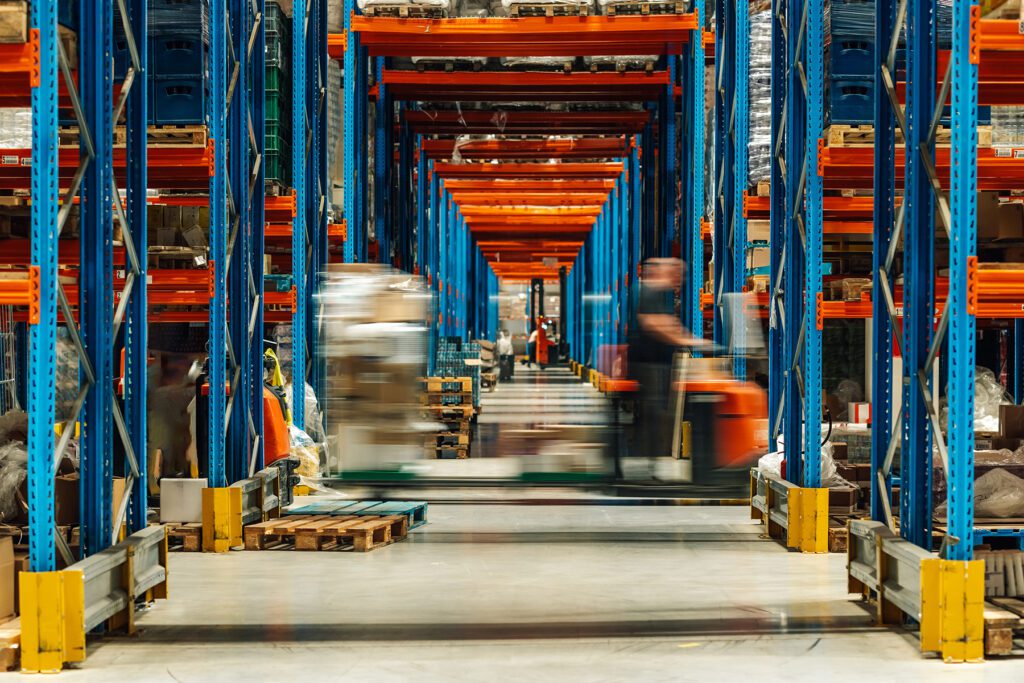
Demand for automated warehouse solutions is growing as businesses seek greater efficiency, resilience and scalability within their operations. Whether driven by labour costs, increased throughput demands or a need for integrated data insights, automated solutions can deliver significant benefits – but realising these benefits comes with considerable investment and businesses face a blend of technical, commercial, legal and operational challenges when procuring automated systems.
Careful planning at the outset is essential to help ensure smooth procurement and installation of the system and to ensure the system delivers as expected. This article series explores some of the many property, construction, technical and operational considerations which businesses need to explore when embarking on a warehouse automation project.
In this first article, we consider issues which a business should considered at the very early stages of any warehouse automation project. Article two then discusses key pre-contract operational and contractual considerations and article three takes a look at post installation issues, as well as what can go wrong when a warehouse installation project is not carefully managed.
Early stage considerations
Building suitability and physical constraints: can you automate your current building and what do you need to change?
- Clear height and configuration: automation lends itself to taller buildings of 15-21m. The building’s height, column grids and tolerances need to be considered by the relevant consultant/structural engineer to establish the level of structural alterations required. Extension of eaves height will likely require planning permission and the timescales involved could necessitate a wholesale reconsideration of the current premises and search for a new appropriate shell elsewhere.
- Floor slab capacity: many automated systems especially those in taller buildings exceed standard warehouse point load assumptions. Uneven slabs can also compromise autonomous vehicle navigation and conveyor alignment. Intrusive investigations need to be carried out prior to any installation to inform whether any slab strengthening and alteration is required.
- Fire suppression compatibility: high-density automated racking often triggers enhanced sprinkler, smoke extraction or compartmentation requirements.
Power
Can you power the automation with your current supply and are there any alternative sources?
- Increased power requirement may be hard to procure from the grid in a timely fashion. Installation of roof-top solar combined with onsite battery storage installed either by you or secured from a third party could supplement and potentially replace the current energy source.
- If there are any adjacent (or within 10km) renewable generators such as a ground mounted solar or wind turbine developments a private wire arrangement could be considered subject to the necessary cable permissions from adjacent owners.
- Could the heat emitted from the automation equipment be harnessed to heat the building and where significant could it be monetised and heat adjacent buildings?
Third Party Consents
Leasehold Property: will the Landlord consent to your automation?
- The alterations provisions in the lease need to be reviewed at the outset of the automation project and early landlord engagement is fundamental before you incur significant capex. Is the landlord required not to unreasonably withhold its consent.
- How long is your lease? Do you need to agree an extension to the term now linked with the lifetime of the equipment being installed?
- Landlords will also want to understand timescales, third party approvals (planning and building control), structural impacts, fire safety, building insurance variations (noting that any premium increases will be passed on to you) you’re your reinstatement obligations.
- If additional mezzanine floors are required will the Landlord seek to rentalise these?
- Permitted hours – if the building will operate for longer are there any permitted hours restrictions in the lease which need amending?
- Capital allowances – the terms of the licence permitting the installation need to make it clear that the plant and machinery belongs to you along with the capital allowances associated with it which you will seek to account for over the equipment’s lifetime.
Procurement
Procurement of a warehouse automation solution can be very complex. Most projects involve the physical construction of high-tech software and robotics in addition to the purchase and installation of equipment, typically these contracts are based on an industry standard form construction contract, such as the JCT MF1.
However, as warehouse automation projects do not entirely fit the traditional structure of standard form construction contracts, most standard form contracts will need considerable tailoring so to create a hybrid agreement which merges construction, software and engineering elements. At Michelmores, we are familiar with the shortcomings of standard construction (and sale and purchase) contracts in this context and have considerable experience creating tailored agreements which better address the unique risks presented by automation projects.
We strongly recommend giving due thought to (and, where necessary, obtaining legal advice on) the form of agreement to be entered into with a chosen supplier as soon as possible and being upfront about your expectations with them. This can help to reduce delays at a later stage.
In any event, it is critical that the parties consider and agree key commercial principles of the agreement as soon as possible to ensure that key risks are considered, allocated and priced for to avoid subsequent protracted contractual negotiations. We recommend that these key terms are then documented in an agreed set of Heads of Terms. Whilst these Heads of Terms will not being legally binding, the process of discussing and agreeing them will highlight potential mismatches and areas of concern which need to be worked through before a final decision on a provider and solution is made.
Typical issues to consider under Heads of Terms may include:
- Who is taking the existing site/building risk? Contractors will typically seek to exclude liability for pre‑existing defects, meaning the employer often retains the risk of latent issues in the structure, slab or services, with potential cost and programme consequences if these emerge during installation.
- What are the guaranteed performance requirements/ levels and what are the consequences should these not meet the requisite thresholds? These can be quite varied in practice ranging from performance liquidated damages, rectification at the cost of the contractor, withholding of payment, through to termination.
- When might the performance levels dictate that works need to be redone?
- What kit and parts are being specified and are these readily available in the market from alternative providers? Being beholden to just one contractor for the warehouse to function is high risk but the market offering is limited in this sector.
- Similarly, what software is involved and embedded in the kit? Is this proprietary to the supplier or licensed by a third party and does this create a potential risk of dependency on the supplier/third party provider for on-going maintenance?
- What are the testing parameters i.e. when should testing occur, what testing is required and what are the consequences of a failure of all or part of the kit following testing?
- What insurances might be required in terms of delay and disruption and who is carrying the cost of the premium for this (noting that it is very costly)?
- How is payment to operate? Typically this is linked to milestones but it is recognised that there is often a huge upfront offsite manufacturing cost which the contractor will want covered through advance payments. Linked to this is how will the client protect itself against such costs and will bonds be required?
- If the kit is coming from abroad, who is responsible for the transport risk and cost?
- What are the consequences for delay in supplying and installing the kit?
- Is a liability cap agreed and if so at what level and what carve-outs apply?
- Who will ongoing maintenance be undertaken by if not the supply and installation contractor as typically the right to deduct performance damages is conditional on the same contractor maintaining it?
- If the supply and installation contractor is also undertaking on-going support and maintenance have terms been agreed regarding on-going support and maintenance?
- What form of support and maintenance contract is envisaged and what are the timings around this? Ideally key terms should be agreed in advance with a view to the support and maintenance contract being entered into at the same time as the main supply contract. Leaving this until a later date often opens the door to risk and uncertainty.
Michelmores’ Commercial, Construction and Real Estate teams have extensive experience advising organisations implementing warehouse automation systems. We support clients throughout the procurement and installation process. Please get in touch if you would like to find out more.