This article takes a closer look at some of the changes.
Diversification and modernisation
Firstly, the new NPPF streamlines the process for agricultural diversification. It contains more explicit support for the modern farming business. The previous 2024 NPPF sought to enable the development and diversification of agricultural and other land-based rural businesses.
The new NPPF goes further; it expressly supports the sustainable growth, diversification and modernisation of agricultural businesses, including farm shops, livestock facilities, reservoirs, polytunnels, greenhouses and seasonal worker accommodation.
When decisions are being made on planning applications, the new NPPF requires that the Council determining an application give substantial weight to the benefits of farm modernisation, domestic food production, animal welfare and environmental improvements. This helpful direction was not in the 2024 NPPF.
As before, there is a recognition that rural businesses may need to be located outside settlements, including in areas with limited public transport provision. However, there is no longer a need to consider this support in the context of meeting community needs, highway impacts or improvements to sustainable transport. For farmers this creates a more supportive starting point for planning.
Protection of land for food production
A new theme of planning policy has been introduced that seeks to steer development away from best and most versatile agricultural land (BMV) where poorer quality land is available, emphasising the important contribution that UK farmers make to national food security. Previously, former policy simply recognised the value of BMV without explicitly protecting it against development.
Drought resilience
Agricultural applications to increase water supply capacity with new reservoirs now carry substantial weight, and there is no longer a requirement for applications to demonstrate an overall need for the infrastructure. Updated planning practice guidance on permitted development rights for on-farm reservoirs is also expected in autumn 2026. No doubt this will be welcome following the summer we have just had.
Development outside settlements
Planning applications for developments of the following types are to be approved despite lying outside settlements unless their adverse effects substantially outweigh the benefits: development relating to agriculture, horticulture and forestry and development supporting rural businesses including tourism. Furthermore, support for these developments is enhanced if the building is to be located on previously developed land.
This is a noticeably more permissive framework than the 2024 NPPF and gives farmers, landowners and rural business owners stronger policy support when pursuing rural development.
Developments in the green belt
Historically, applications for new housing or commercial developments on open land in the green belt were very likely to be refused. Two years ago, this changed with the introduction of grey belt. Grey belt is land in the green belt that does not (on certain levels) assist the green belt purposes. Housing developments on land shown to be grey belt are more likely to be approved.
The tests for the identification of grey belt have been simplified. Again, this is helpful as it improves the propensity for strategic development land to secure its development potential.
Land adjacent to train stations
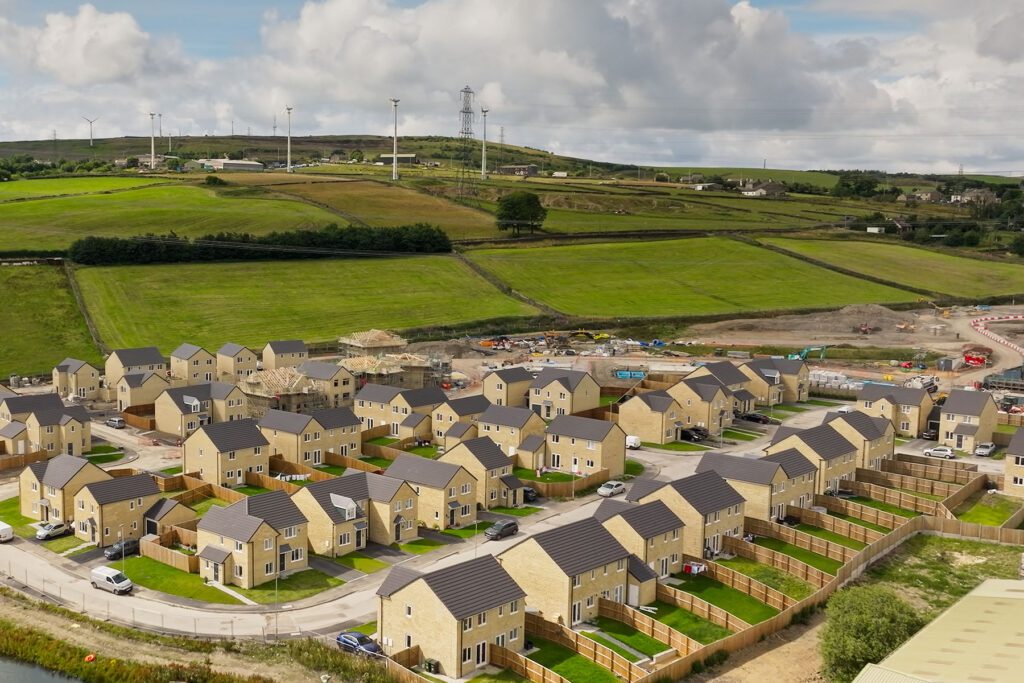
Landowners with land adjacent to villages or towns, and any land adjacent to the better served railway stations will find greater opportunities to promote their sites through local plans or secure planning permission. For landowners previously advised that a rural location made planning permission unlikely, now may be a good time to revisit those prospects and seek fresh planning advice.
On the flipside, the stronger presumption in favour of sustainable development also brings the potential for unwanted development in rural areas. Landowners concerned about nearby proposed development should consider seeking planning advice at an early stage.
Renewable schemes
As set out in our recent article ‘New NPPF strengthens planning support for renewable energy‘ the new NPPF gives substantial weight to the benefits of renewable and low-carbon energy development and states that applicants should not be required to demonstrate need. For landowners with suitable sites, this is a significant benefit and should help accelerate projects capable of contributing to net zero and energy security.
Conclusion
The new NPPF has improved the opportunities for farming businesses seeking to modernise, diversify or promote land for development.
It is an exciting opportunity for those looking to unlock the potential of their land.